I was raised not to think of myself as different. My parents sent me to a progressive primary school so I wouldn’t be singled out for my physical differences.
While I couldn’t do everything that other kids could do – like walk fast, or run, or ride a bike – for the most part I was universally accepted. As a result, I didn’t speak too much about my disability growing up, and I certainly didn’t have any awareness of ‘disability pride’.
Out of politeness, or the fear of causing offence, the topic of disability is still very much taboo. When I walk past kids in the street, they often ask: “Why does that man walk like that?”. Their embarrassed parent rushes to shush the child, telling them not to talk about it.
After a lifetime of cerebral palsy being the elephant in the room, I want to talk about my disability.
I was born three months premature and spent my first few weeks of life in a humidicrib. I had numerous operations as a child. I had squints corrected. I had my hips rotated outwards. I had my Achilles tendons spliced and sewn back together.
When I returned to school, I remember the older kids teasing me because I had black eyes from the surgery. I got called ‘spastic’ ‘black-eyed salami’ and other ridiculous but hurtful names.
I had seen the same paediatric specialist since I was born. When I was 15, I was due for my next surgery. I was told it would reduce pain and back problems later in life, and help me walk more normally.
For the first time, I was old enough to consent to the procedure. To the doctor’s disappointment, I refused. I didn’t want to be subjected to any more surgeries or time away from school. I just wanted to be left alone.
I remember feeling quite strongly that I didn’t want to be made ‘more normal’. I was happy with the way I was. This was probably the first time I experienced something akin to disability pride.
The way I move singles me out as different, but I am proud of who I am.
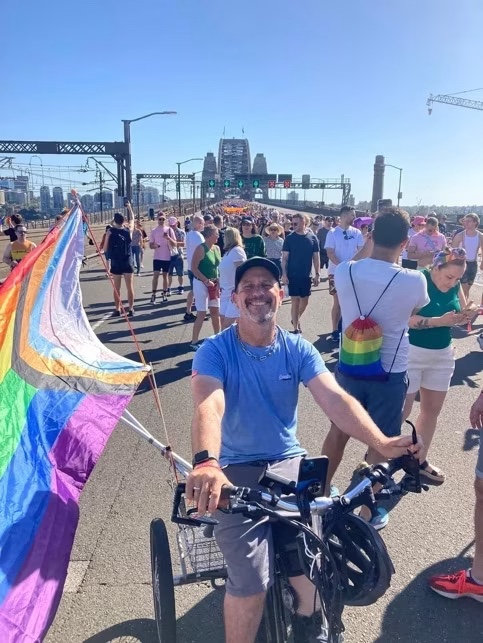
In recent years, thanks to the internet, I’ve been able to meet others like myself who have cerebral palsy, and also, other queer people who have disability. These intersecting identities, although each separate and unique, are instructive in understanding why the notion of pride is so important.
Queer people and people with disability both grow up in a world programmed to make us feel ashamed of who we are.
Often from the day we are born, we are made to that we don’t fit in. We’re told that we are less than. Inferior. Abhorrent. We face verbal taunts and physically abuse. We experience exclusion and isolation because of physical and attitudinal barriers.
We internalise this reality and it impacts our sense of self-worth, contributing to higher rates of depression, anxiety and other mental health conditions.
Pride guards against this kind of negativity and helps reclaim our space in the world. It’s about being confident in the knowledge that ‘I am valuable’. ‘I matter’. ‘I am capable’. ‘I have a contribution to make’. ‘I am unique and wonderful’. This is what disability pride means to me.
Five years ago, I had never met another person with cerebral palsy. Now I am part of a diverse, supportive community. For the first time in my life not only do I feel that I matter – I belong.
 TrikeBoy
Leave a comment